The multi-material additive manufacturing design guide

Our Multi-Material Additive Manufacturing Design Guide explains how multi-metal and metal + ceramic printing makes designs once thought impossible, and how to prepare your parts for it. It covers how laser powder bed fusion (LPBF) works, material and design considerations, application examples, and a roadmap from concept to production.
Why multi-material printing
Conventional metal printing builds a part from one alloy. Multi-material LPBF puts several metals, or metals and ceramics, in a single build. A steel mold insert can carry a copper core where it needs to shed heat; a part that used to be brazed from three pieces can be printed as one.
- Multi-metal in one build: steel, copper, bronze and Inconel pairs printed in one part
- Metal + ceramic: ceramics and multi-ceramic parts on the same LPBF platform
- Fewer assembly steps: functional grading replaces joints, brazes and fasteners
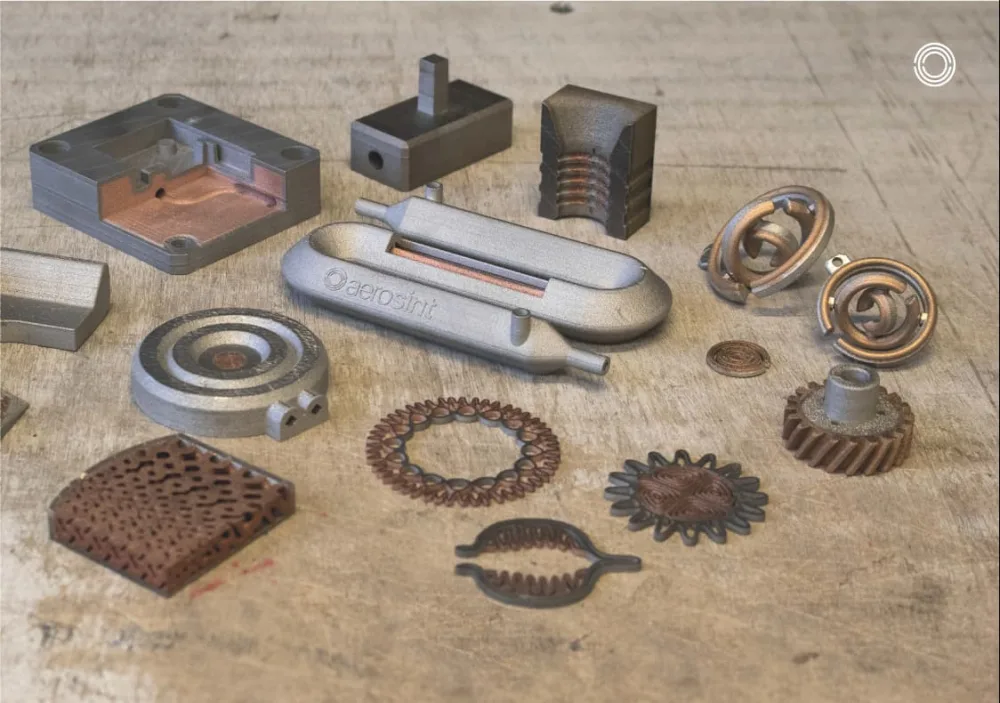
Application inspiration
The guide opens with a showcase of applications and industry use cases already running on multi-material additive manufacturing, from tooling to thermal management.
Material combinations
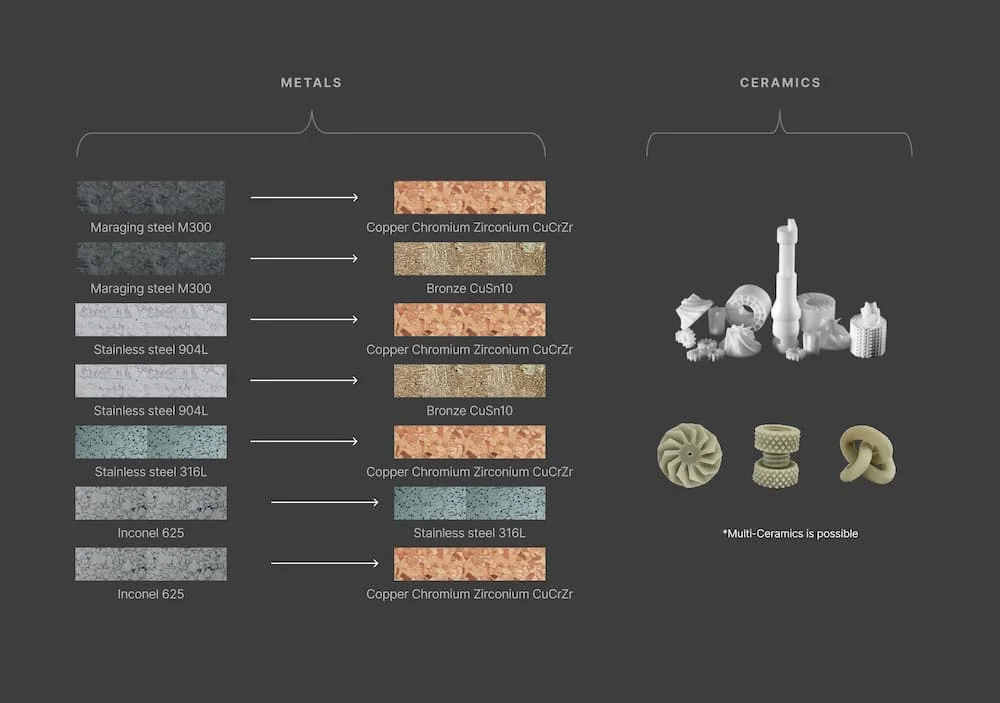
Which materials and material pairs are available, and how to use them to improve the function and design of your part. The guide includes a complete compatibility chart covering steel + copper, ceramics + metals, and more.
Design guidelines
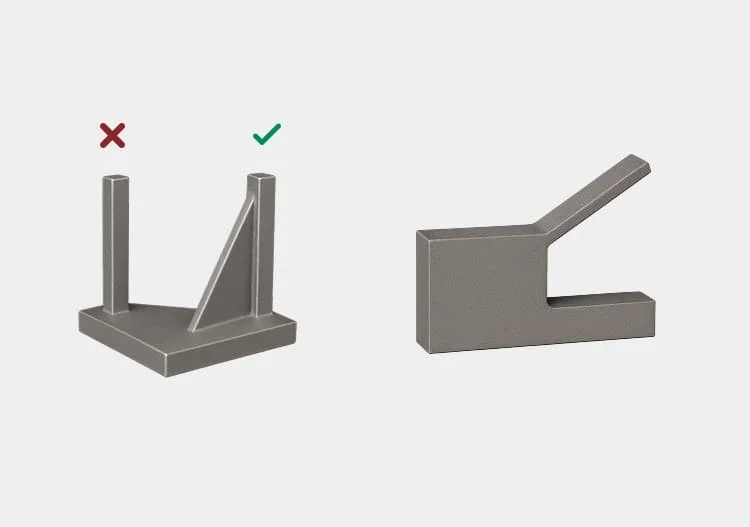
Feature specifications, limitations and best practices, with right and wrong examples for each. The guide covers:
- Support structure requirements for overhangs and complex geometries
- Wall thickness specifications for different materials
- How to design internal holes, escape passages and cooling channels
- Pitfalls and design features to avoid
Technical specifications
The process limits you need to design against:
| Parameter | Value |
|---|---|
| Layer thickness | 40–200 μm |
| Wall thickness by material | 100–200 μm |
| Pixel resolution | 300 μm |
| Maximum component size | 250 mm³ |
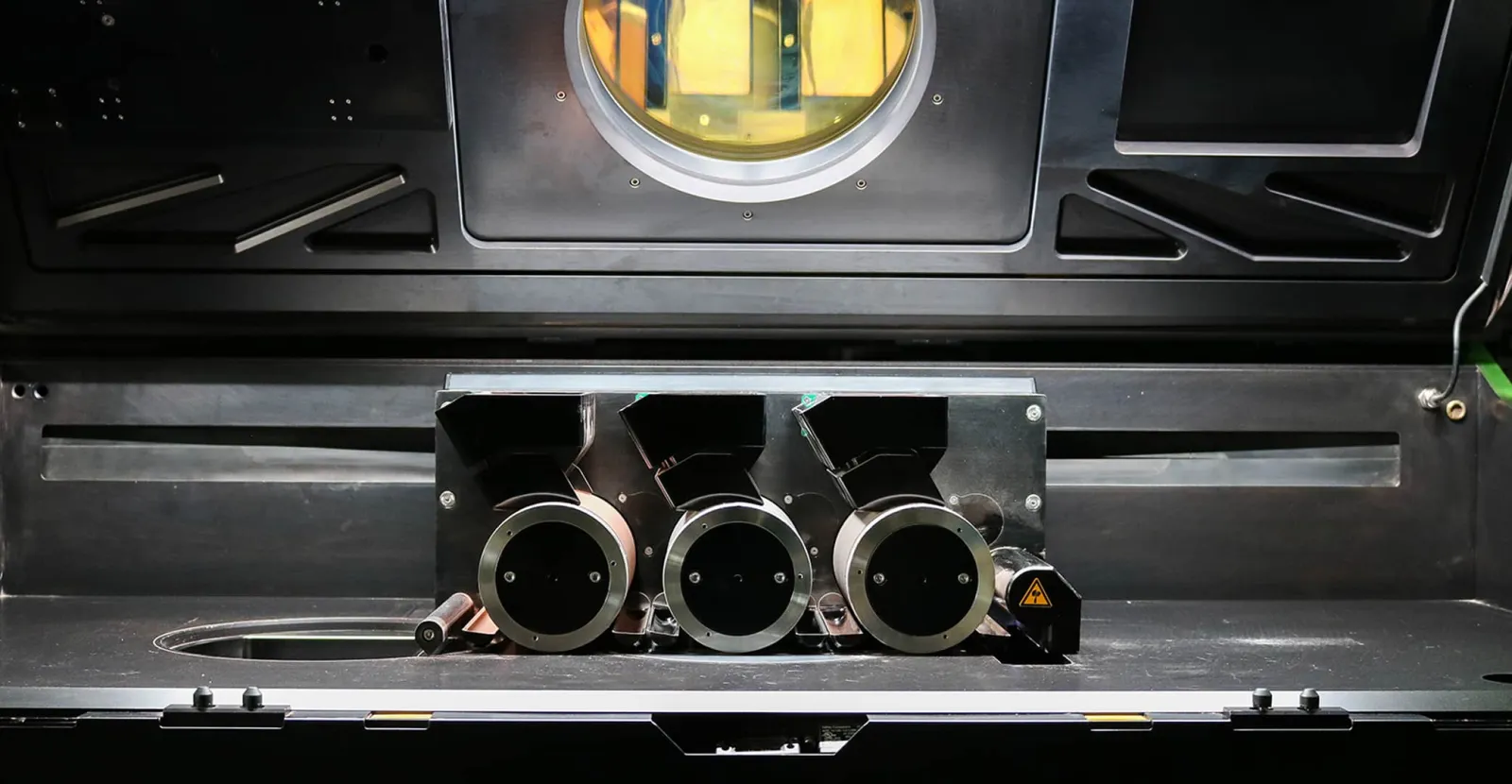
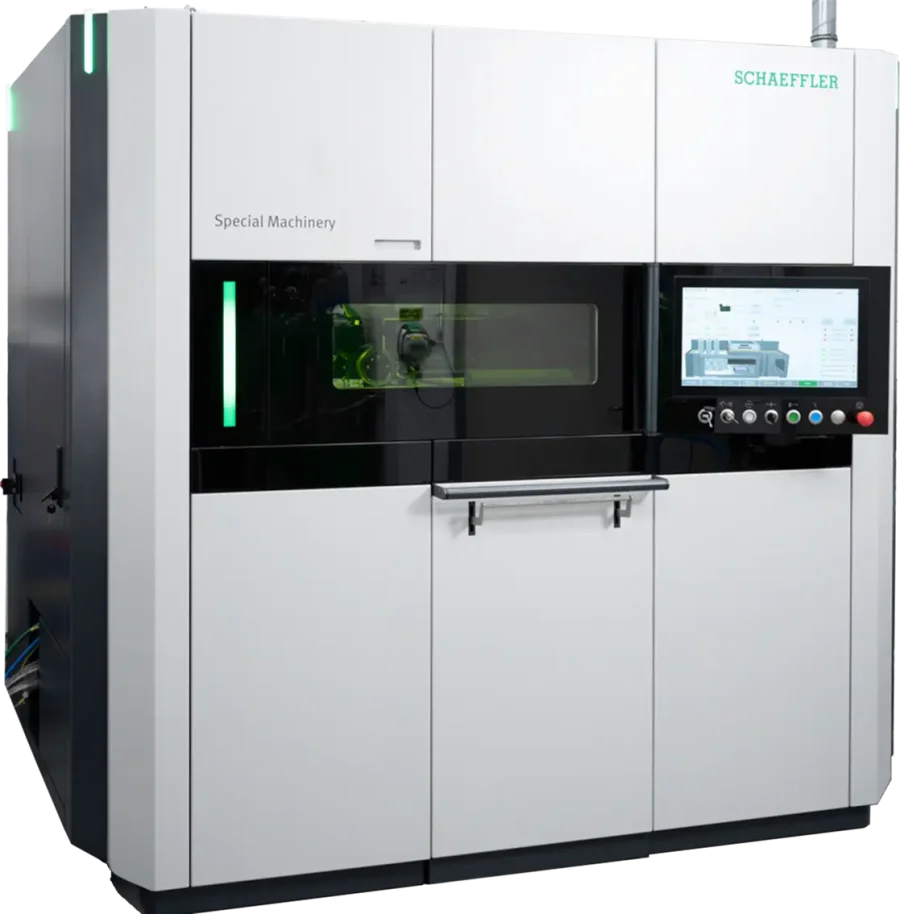
These figures come from Schaeffler’s Omnifusion 3D, the multi-material, metal + ceramic additive platform we run in our lab.
Inside the guide
Six chapters, from LPBF basics to production:
| Chapter | What it covers |
|---|---|
| 01. Design guidelines | Support structures, wall thickness by material, internal holes, escape passages and cooling channels. |
| 02. Best practices | Designing for features specific to your part, pitfalls to avoid, and how not to design your part. |
| 03. Multi-material capabilities | Material compatibility chart, functional grading, and designing out assembly steps. |
| 04. Technical specifications | Layer thickness, build volume constraints, pixel resolution and recoating speeds. |
| 05. How LPBF works | What laser powder bed fusion is, how the process works, and how Omnifusion 3D extends it. |
| 06. Project roadmap | Four phases from concept to production, sample runs, and equipment selection. |
Designs once thought impossible start here. Download the guide below, or talk to our engineers about your part.
Get the full guide
The full design guide, sent straight to your inbox. No sales call required.